
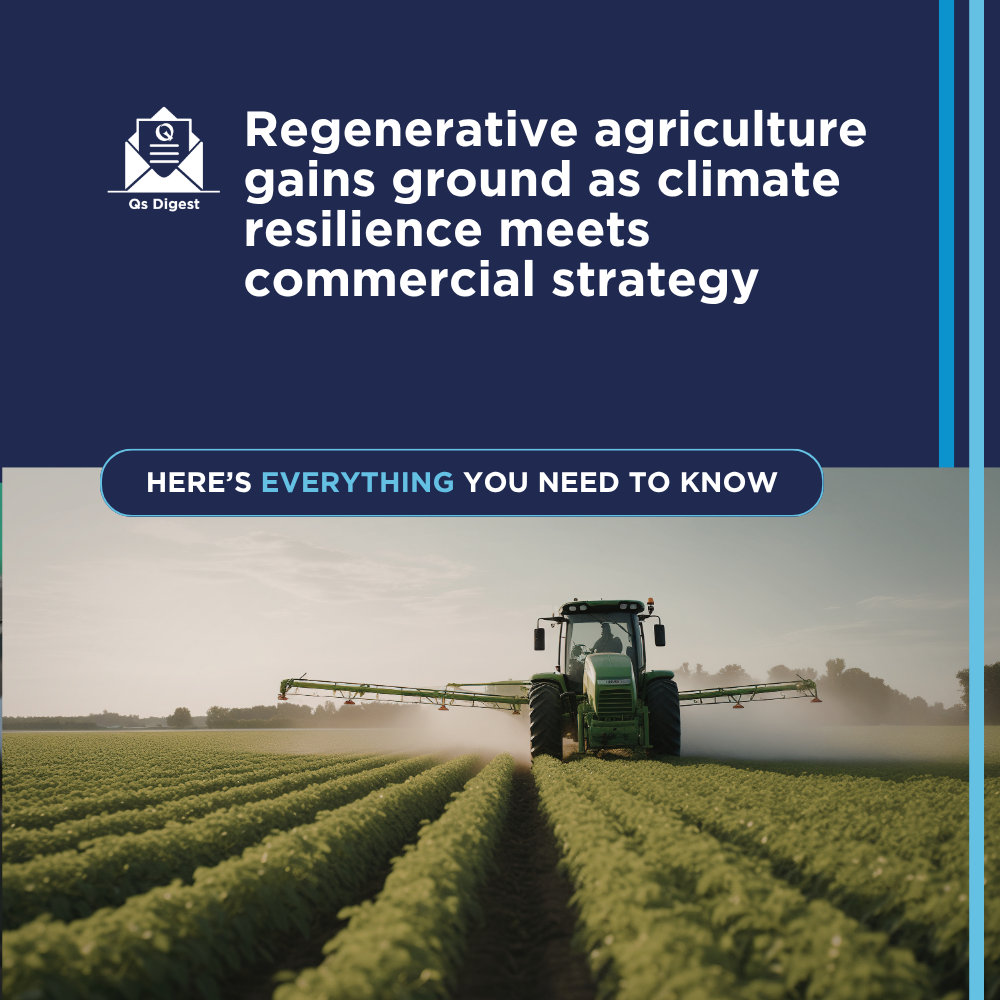
Regenerative agriculture gains ground as climate resilience meets commercial strategy
As climate volatility and environmental concerns intensify, leading food manufacturers are increasingly integrating regenerative agriculture into their core business strategies, seeking both ecological and economic benefits amid ongoing challenges.
Regenerative agriculture is moving from the margins of food policy to the centre of commercial strategy, as manufacturers confront the twin pressures of climate volatility and environmental degradation. In a Green Alliance blog, Emma Piercy of the Food and Drink Federation argues that the UK food sector can no longer treat soil health, biodiversity and water stewardship as separate from business resilience, because extreme weather, rising input costs and weaker yields are already affecting supply chains.
The case for change is not just ecological but economic. Piercy says poor soil quality is costing the sector hundreds of millions of pounds each year through lower productivity and higher fertiliser bills, while the wider food system remains a major driver of global greenhouse-gas emissions, biodiversity loss and freshwater use. Against that backdrop, practices such as reduced tillage, cover cropping and better nutrient management are being presented as a practical way to improve resilience to drought and flooding while cutting dependence on synthetic inputs.
Large companies are already trying to embed those ideas. Nestlé says its regenerative agriculture work is designed to improve soil health, biodiversity and water resources, with a goal of sourcing half of its key ingredients from farmers using such methods by 2030. McCain Foods says regenerative farming is central to its sustainability strategy and has been expanding innovation farms, including a UK site, while working with agricultural banks to ease the financing burden on growers making the transition. Both companies frame the shift as a way to protect future supply as much as to meet environmental targets.
But the transition remains uneven. Piercy warns that many consumers are still unwilling to pay more for products linked to regenerative farming, even as businesses face pressure to keep prices low. She also points to a more technical obstacle: the lack of common standards for data collection, carbon accounting and even the definition of regenerative agriculture itself, all of which makes it harder for firms to compare investments or substantiate marketing claims.
That is why the debate is increasingly moving beyond farm practice to finance, procurement and measurement. The World Resources Institute has argued that regenerative agriculture can deliver important soil and ecosystem benefits, but is unlikely on its own to produce large-scale emissions cuts. The World Economic Forum has similarly stressed the value of cross-sector partnerships and climate finance to help farmers adopt more resilient methods. For Piercy, the lesson is that the work must now be scaled through training, capital support and collective action if the sector is to keep pace with a changing climate.